Asteroid 9618 Johncleese (1993 FQ8) has its closest approach to Earth (1.226 AU). 9618 Johncleese is a main-belt asteroid discovered on March 17th, 1993, at the European Southern Observatory during the Uppsala-ESO Survey of Asteroids and Comets (UESAC). 9618 Johncleese is named after Briitish comedian John Cleese. Celestial coordinates (J2000) R.A. 18h 15m 58.70s Dec -36deg 14m 35.6s. Apparent magnitude 17.39.
Asteroid 115561 Frankherbert (2003 UF80) has its closest approach to Earth (2.214 AU). 115561 Frankherbert is a main-belt asteroid discovered on October 20th, 2003, from George Observatory, Needville, Texas, by American geophysicist and amateur astronomer William G. Dillon and American television production manager and amateur astronomer Don J. Wells. 115561 Frankherbert is named after American science fiction writer Frank Herbert. Celestial coordinates (J2000) R.A. 18h 55m 06.52s Dec -12deg 11m 41.4s. Apparent magnitude 19.20.
To catch postings for all my blogs, subscribe on Twitter to @RoamingAstro . Like what you see? Let me know! Email: RoamingAstroInput@gmail.com .
-
Monday, July 02, 2012

Io's Heat Flow Is Baffling

The above image is a mapping of thermal emissions on Jovian moon Io. The emissions are from erupting volcanoes. A logarithmic scale is used to classify volcanoes on the basis of thermal emission: the larger the spot, the larger the thermal emission. Image credit: NASA/JPL-Caltech/Bear Fight Institute
A new study finds that the pattern of heat coming from volcanoes on Io's surface contradicts the generally-accepted model of internal heating. The heat pouring out of Io's hundreds of erupting volcanoes indicates a complex, multi-layer source. These results come from data collected by NASA spacecraft and ground-based telescopes and appeared in the June issue of the journal Icarus. The journal may be visited online at this URL: www.sciencedirect.com/science/journal/00191035
A map of hot spots, classified by the amount of heat being emitted, shows the global distribution and wide range of volcanic activity on Io. And we are talking big booms, here. Most of Io's eruptions dwarf their contemporaries on Earth.
This study of Io's volcanic thermal emission is the most comprehensive to date. The work was led by Glenn Veeder of the Bear Fight Institute, Winthrop, Washington. The multi-faceted team included Ashley Davies, Torrence Johnson and Dennis Matson of NASA's Jet Propulsion Laboratory, Pasadena, California, Jani Radebaugh of Brigham Young University, in Provo, Utah, and David Williams of Arizona State University, Tempe, Arizona. The team examined data primarily from the NASA's Voyager and Galileo missions, but also incorporated infrared data obtained from telescopes on Earth.
The team was most fascinated about the unexpected findings regarding Io's heat flow. Specifically, that the distribution of Io's heat flow does not match the currently preferred Io model of tidal heating at relatively shallow depths. Instead, the main thermal emissions occur about 40 degrees eastward of their expected positions. The pattern points to a complex heating process within Io, with a mixture of both deep and shallow heating.
A mystery has also emerged. The team found that active volcanoes accounted for only about 60 percent of Io's heat. This component mostly emanates from flat-floored volcanic craters called paterae, a common feature on Io. But where is the "missing" 40 percent? The team is investigating the possibility that there are many smaller volcanoes that are difficult, but not impossible, to detect. Currently, they are puzzling over the observed pattern of heat flow.
Understanding this will help identify the tidal heating mechanisms not only within Io, but also may apply to neighboring Europa, a high-priority target for NASA in its search for life beyond Earth.
And now, the mission particulars...
The Galileo mission was managed by NASA's Jet Propulsion Laboratory (JPL) in Pasadena, California, for the agency's Science Mission Directorate. The mission was launched by the space shuttle Atlantis in 1989 to Jupiter, produced numerous discoveries and provided scientists decades worth of data to analyze. Galileo was the first spacecraft to directly measure Jupiter's atmosphere with a probe and conduct long-term observations of the Jovian system. NASA extended the mission three times to take advantage of Galileo's unique science capabilities, and the spacecraft was put on a collision course into Jupiter's atmosphere in September 2003 to eliminate any chance of impacting Europa. JPL is a division of the California Institute of Technology in Pasadena.
For more information about the Galileo mission, visit: solarsystem.nasa.gov/galileo .
To catch postings for all my blogs, subscribe on Twitter to @RoamingAstro .
Like what you see? Let me know! Email: RoamingAstroInput@gmail.com
-
A new study finds that the pattern of heat coming from volcanoes on Io's surface contradicts the generally-accepted model of internal heating. The heat pouring out of Io's hundreds of erupting volcanoes indicates a complex, multi-layer source. These results come from data collected by NASA spacecraft and ground-based telescopes and appeared in the June issue of the journal Icarus. The journal may be visited online at this URL: www.sciencedirect.com/science/journal/00191035
A map of hot spots, classified by the amount of heat being emitted, shows the global distribution and wide range of volcanic activity on Io. And we are talking big booms, here. Most of Io's eruptions dwarf their contemporaries on Earth.
This study of Io's volcanic thermal emission is the most comprehensive to date. The work was led by Glenn Veeder of the Bear Fight Institute, Winthrop, Washington. The multi-faceted team included Ashley Davies, Torrence Johnson and Dennis Matson of NASA's Jet Propulsion Laboratory, Pasadena, California, Jani Radebaugh of Brigham Young University, in Provo, Utah, and David Williams of Arizona State University, Tempe, Arizona. The team examined data primarily from the NASA's Voyager and Galileo missions, but also incorporated infrared data obtained from telescopes on Earth.
The team was most fascinated about the unexpected findings regarding Io's heat flow. Specifically, that the distribution of Io's heat flow does not match the currently preferred Io model of tidal heating at relatively shallow depths. Instead, the main thermal emissions occur about 40 degrees eastward of their expected positions. The pattern points to a complex heating process within Io, with a mixture of both deep and shallow heating.
A mystery has also emerged. The team found that active volcanoes accounted for only about 60 percent of Io's heat. This component mostly emanates from flat-floored volcanic craters called paterae, a common feature on Io. But where is the "missing" 40 percent? The team is investigating the possibility that there are many smaller volcanoes that are difficult, but not impossible, to detect. Currently, they are puzzling over the observed pattern of heat flow.
Understanding this will help identify the tidal heating mechanisms not only within Io, but also may apply to neighboring Europa, a high-priority target for NASA in its search for life beyond Earth.
And now, the mission particulars...
The Galileo mission was managed by NASA's Jet Propulsion Laboratory (JPL) in Pasadena, California, for the agency's Science Mission Directorate. The mission was launched by the space shuttle Atlantis in 1989 to Jupiter, produced numerous discoveries and provided scientists decades worth of data to analyze. Galileo was the first spacecraft to directly measure Jupiter's atmosphere with a probe and conduct long-term observations of the Jovian system. NASA extended the mission three times to take advantage of Galileo's unique science capabilities, and the spacecraft was put on a collision course into Jupiter's atmosphere in September 2003 to eliminate any chance of impacting Europa. JPL is a division of the California Institute of Technology in Pasadena.
For more information about the Galileo mission, visit: solarsystem.nasa.gov/galileo .
To catch postings for all my blogs, subscribe on Twitter to @RoamingAstro .
Like what you see? Let me know! Email: RoamingAstroInput@gmail.com
-
Sunday, July 01, 2012
On July 1st: KSC, Mercury, Asteroids

Happy Birthday, KSC!
The 50th birthday of NASA's John F. Kennedy Space Center (KSC). Located on Merritt Island, Florida, KSC has been the launch site for every United States human space flight since 1968.
The facility was authorized in 1958 during the administration of President Dwight D. Eisenhower. It was originally known as the Launch Operations Directorate (LOD), reporting to the Marshall Space Flight Center in Alabama.
President John F. Kennedy's 1961 goal of a lunar landing before 1970 led to an expansion of NASA operations from a few buildings in the Industrial Area of Cape Canaveral Missile Test Annex (later Cape Canaveral Air Force Station). NASA began land acquisition in 1962. The major buildings in KSC's Industrial Area were designed by architect Charles Luckman.
On July 1st, 1962, the site was renamed the Launch Operations Center, achieving equal status with other NASA centers. On November 29th, 1963, following the death of President Kennedy, the facility received its current name by Executive Order 11129.
To learn more about KSC's history, check out this URL: www.nasa.gov/centers/kennedy/about/history/index.html
Happy Anniversary, Hebe!
Asteroid 6 Hebe has its 165th anniversary of discovery (July 1st, 1847) by German amateur astronomer Karl Ludwig Hencke. 6 Hebe is a large main-belt asteroid.
Orbital Mechanics
The planet Mercury is at its greatest eastern elongation (26 degrees). On Sunday, June 24th, NASA's MErcury Surface, Space ENvironment, GEochemistry, and Ranging (MESSENGER) mission completed its 1,000th orbit of Mercury since orbit insertion in mid-March 2011. The primary mission was planned to end on March 17th, 2012, but NASA has announced an extension to MESSENGER for additional year. For more on Mercury and the MESSENGER mission, visit these URLs: www.nasa.gov/messenger and messenger.jhuapl.edu .
Asteroid 1221 Amor (1932 EA1) has its closest approach to Earth (0.745 AU). 1221 Amor is a Mars-crossing, near-Earth asteroid discovered on March 12th, 1932, by Belgian astronomer Eugène Joseph Delporte. 1221 Amor is the namesake of the Amor asteroids, a group of near-Earth astroids which approach Earth from beyond, but do not cross Earth's orbit. Most Amors do cross the orbit of Mars. Some suggest that the two moons of Mars, Deimos and Phobos, may be Amor asteroids that were captured by Mar's gravity.
Asteroid 5392 Parker (1986 AK) has its closest approach to Earth (1.854 AU). 5392 Parker is a Mars-crossing, near-Earth asteroid discovered on January 12th, 1986, from Palomar Observatory, San Diego, by American astronomer Carolyn S. Shoemaker. 5392 is named in honor of American physician and amateur astronomer Donald C. Parker.
Asteroid 216 Kleopatra (A905 OA, A910 RA) has its closest approach to Earth (2.036 AU). 216 Kleopatra is a main-belt asteroid discovered April 10th, 1880, from Pula, by Austrian astronomer Johann Palisa. 216 Kleopatra was named after the queen of ancient Egypt (Cleopatra) and it was recently discovered that it has two small moons.
-
Fabulous Fabia from HAMO

Above are two images of Vesta's crater Fabia (bottom right) and surrounding area. The image at left is a Dawn FC (framing camera) image showing the apparent surface brightness The image at right is overlain with color-coded based on surface topography. Image Credit: NASA/JPL-Caltech/UCLA/MPS/DLR/IDA
Wait! I know what you're thinking and no, the title is not the name of a Vegas show dancer. It is actually a brief description for a northern hemisphere crater on asteroid Vesta which was imaged during NASA's Dawn mission phase known as the High Altitude Mapping Orbit (HAMO). You see? Now you understand why I went with the, briefer, Variety-style title.
As noted, above are two images of Vesta's crater Fabia. The left-hand image is a Dawn FC (framing camera) image, which shows the apparent brightness of the surface. The right-hand image is based on this apparent brightness image, which has had a color-coded height representation of the topography overlain onto it. The topography is calculated from a set of images that were observed from different viewing directions, which allows stereo reconstruction. The various colors correspond to the height of the area. The white and red areas in the topography image are the highest areas and the blue areas are the lowest areas. Fabia crater is the large crater in the bottom right part of the images, with bright material along the left side of its rim. There are many features associated with mass movement of material into the center of Fabia crater. The topography image shows that the deepest part of Fabia crater (colored yellow) is offset to the right of its center. This may be due to the mass movement or to slumping that occurred in this crater. This region of Vesta is reasonably heavily cratered and there are many other craters visible in the images.
The imaged surface is located in Vesta’s Numisia quadrangle, in Vesta’s northern hemisphere. Dawn obtained the apparent brightness image with its framing camera on October 24, 2011. This image was taken through the camera’s clear filter. The distance to the surface of Vesta is 700 kilometers (435 miles) and the image has a resolution of about 70 meters (230 feet) per pixel. As noted earlier, this image was acquired during the HAMO (high-altitude mapping orbit) phase of the mission. These images are lambert-azimuthalmap projected.
At the end of April, NASA's Dawn spacecraft and mission team successfully completed nearly five months of low-altitude study of Vesta, orbiting at an average altitude of 210 kilometers (130 miles).
Since June 15th, Dawn has been in its final major science data-gathering phase at Vesta, called high-altitude mapping orbit 2 (HAMO2). Observations obtained from this orbit will provide a companion set of data and images to those obtained during HAMO. A key difference in this phase will be the angle of the sunlight hitting Vesta. The new angle illuminates more of the northern regions that were missed in previous mapping. The principal science observations planned in this new orbit will be obtained with the framing camera and the visible and infrared mapping spectrometer.
Following this final science data gathering phase, Dawn will then spend almost five weeks spiraling out from the giant asteroid to the point at which Vesta will lose its gravitational hold on the spacecraft. That departure day is expected to be around August 26 (my birthday). Dawn will turn to view Vesta as it leaves and acquire more data. Then, Dawn will set its sights on the dwarf planet Ceres, and begin a two-and-a-half year journey to investigate the largest body in the main asteroid belt. Dawn will enter orbit around Ceres in 2015.
And now, the mission particulars...
The Dawn mission to Vesta and Ceres is managed by the Jet Propulsion Laboratory (JPL), a division of the California Institute of Technology in Pasadena, for NASA's Science Mission Directorate, Washington D.C. UCLA is responsible for overall Dawn mission science. Dawn is a project of the directorate's Discovery Program, managed by NASA's Marshall Space Flight Center in Huntsville, Alabama. Orbital Sciences Corporation (OSC) in Dulles, Virginia, designed and built the spacecraft. The German Aerospace Center, the Max Planck Institute for Solar System Research, the Italian Space Agency and the Italian National Astrophysical Institute are international partners on the mission team. The Dawn framing cameras were developed and built under the leadership of the Max Planck Institute for Solar System Research, Katlenburg-Lindau, Germany, with significant contributions by DLR German Aerospace Center, Institute of Planetary Research, Berlin, and in coordination with the Institute of Computer and Communication Network Engineering, Braunschweig. The Framing Camera project is funded by the Max Planck Society, DLR, and NASA/JPL. The California Institute of Technology in Pasadena manages JPL for NASA.
To view the new Vesta images and for more information about Dawn, visit: www.nasa.gov/dawn and dawn.jpl.nasa.gov .
To catch postings for all my blogs, subscribe on Twitter to @RoamingAstro .
Like what you see? Let me know! Email: RoamingAstroInput@gmail.com
-
Saturday, June 30, 2012
On July 30th: A Leap Second and Asteroids
Leap Second
We have a leap second today. A leap second is a one-second adjustment that is occasionally applied to Coordinated Universal Time (UTC) in order to keep its time of day close to the mean solar time. Today's leap second will be inserted at 23:59:60 UTC (29:59:60 EDT / 26:59:60 PDT).
The UTC time standard uses the international system (SI) definition of the second, based on atomic clocks. Like most time standards, UTC defines a grouping of seconds into minutes, hours, days, months, and years. However, the duration of one mean solar day is slightly longer than 24 hours (86400 SI seconds). Therefore, if the UTC day were defined as precisely 86400 SI seconds, the UTC time-of-day would slowly drift apart from that of solar-based standards, such as Greenwich Mean Time (GMT) and its successor UT1. The purpose of a leap seconds is to compensate for this drift, by scheduling days with 86401 or 86399 SI seconds.
Because the Earth's rotation speed varies in response to climatic and geological events, UTC leap seconds are irregularly spaced and unpredictable. The insertion of each UTC leap second is usually decided about six months in advance by the International Earth Rotation and Reference Systems Service (IERS), when needed to ensure that the difference between the UTC and UT1 readings will never exceed 0.9 second. Between their adoption in 1972 and June 2012, 25 leap seconds have been scheduled, all additions (no subtractions).
Close Approaches
Asteroid 17058 Rocknroll (1999 GA5) has its closest approach to Earth (1.789 AU). 17058 Rocknroll is a main-belt asteroid discovered on April 13th, 1999, from at Reedy Creek Observatory, Queensland, by Australian astronomer John Broughton.
Asteroid 7367 Giotto (3077 T-1) has its closest approach to Earth (2.128 AU). 7367 Giotto is a main-belt asteroid discovered on March 26th, 1971 from Palomar Observatory, San Diego, by Dutch astronomers Cornelis Johannes van Houten and Ingrid van Houten-Groeneveld, and American astronomer Tom Gehrels.
Asteroid 34901 Mauna Loa (2699 P-L) has its closest approach to Earth (2.864 AU). 34901 Mauna Loa is a main-belt asteroid discovered on September 24th, 1960 from Palomar Observatory, San Diego, by Dutch astronomers Cornelis Johannes van Houten and Ingrid van Houten-Groeneveld, and American astronomer Tom Gehrels.
To catch postings for all my blogs, subscribe on Twitter to @RoamingAstro . Like what you see? Let me know! Email: RoamingAstroInput@gmail.com
-
We have a leap second today. A leap second is a one-second adjustment that is occasionally applied to Coordinated Universal Time (UTC) in order to keep its time of day close to the mean solar time. Today's leap second will be inserted at 23:59:60 UTC (29:59:60 EDT / 26:59:60 PDT).
The UTC time standard uses the international system (SI) definition of the second, based on atomic clocks. Like most time standards, UTC defines a grouping of seconds into minutes, hours, days, months, and years. However, the duration of one mean solar day is slightly longer than 24 hours (86400 SI seconds). Therefore, if the UTC day were defined as precisely 86400 SI seconds, the UTC time-of-day would slowly drift apart from that of solar-based standards, such as Greenwich Mean Time (GMT) and its successor UT1. The purpose of a leap seconds is to compensate for this drift, by scheduling days with 86401 or 86399 SI seconds.
Because the Earth's rotation speed varies in response to climatic and geological events, UTC leap seconds are irregularly spaced and unpredictable. The insertion of each UTC leap second is usually decided about six months in advance by the International Earth Rotation and Reference Systems Service (IERS), when needed to ensure that the difference between the UTC and UT1 readings will never exceed 0.9 second. Between their adoption in 1972 and June 2012, 25 leap seconds have been scheduled, all additions (no subtractions).
Close Approaches
Asteroid 17058 Rocknroll (1999 GA5) has its closest approach to Earth (1.789 AU). 17058 Rocknroll is a main-belt asteroid discovered on April 13th, 1999, from at Reedy Creek Observatory, Queensland, by Australian astronomer John Broughton.
Asteroid 7367 Giotto (3077 T-1) has its closest approach to Earth (2.128 AU). 7367 Giotto is a main-belt asteroid discovered on March 26th, 1971 from Palomar Observatory, San Diego, by Dutch astronomers Cornelis Johannes van Houten and Ingrid van Houten-Groeneveld, and American astronomer Tom Gehrels.
Asteroid 34901 Mauna Loa (2699 P-L) has its closest approach to Earth (2.864 AU). 34901 Mauna Loa is a main-belt asteroid discovered on September 24th, 1960 from Palomar Observatory, San Diego, by Dutch astronomers Cornelis Johannes van Houten and Ingrid van Houten-Groeneveld, and American astronomer Tom Gehrels.
To catch postings for all my blogs, subscribe on Twitter to @RoamingAstro . Like what you see? Let me know! Email: RoamingAstroInput@gmail.com
-
Odyssey Running On Spare

The above image is an artist's concept of NASA's Mars Odyssey spacecraft passing above the south pole of the planet Mars. Odyssey has been orbiting Mars since October 24, 2001. Image Credit: NASA/JPL-Caltech
NASA's Mars Odyssey orbiter had some problems in June, but has now resumed all normal spacecraft activities. Good thing they packed that spare...
Spare? Come again?
Like many other spacecraft, Odyssey uses a set of three reaction wheels to control its attitude, or which way it is facing relative to the sun, Earth or Mars. Increasing the rotation rate of a reaction wheel inside the spacecraft causes the spacecraft itself to rotate in the opposite direction. Since its launch in April 2001 Odyssey had used these three wheels for its orientation. But on June 8th, UTC (June 7th, PDT) one of these wheels stuck for a few minutes. This caused Odyssey to go into "safe mode," in which the spacecraft reduced its number of activities, pointed at Earth and awaited instructions.
Fortunately, the mission designers had the good sense to "pack a spare." In this case, a fourth reaction wheel which was skewed at angles to all three primaries so that it could replace any of them as needed.
Once the Odyssey engineers assessed that the primary wheel was no longer reliable, they discontinued its operation and turned to the fourth wheel, which had been in non-operational storage for more than 11 years. The wheel passed preliminary tests on June 12th, spinning at up to 5,000 rotations forward and backward.
Wait. Doesn't Odyssey have thrusters?
Odyssey has and can use thrusters to control its attitude. But reaction wheels offer the advantage of running on renewable electricity from the orbiter's solar array, rather than drawing on the finite supply of thruster fuel. They also provide more precise control of pointing, which can enable higher data-rate communications through the orbiter's directional antenna. On June 16th, Odyssey began the several-day process of resuming normal spacecraft activities. At that time the spacecraft was pointed downward toward Mars. Controllers continued characterizing the performance of the replacement wheel over the days that followed, while assessing which other activities of the spacecraft could be performed reliably with reaction-wheel control of attitude.
Observations of Mars resumed June 25th with Odyssey's Thermal Emission Imaging System and its Gamma Ray Spectrometer. As a relay, Odyssey received data from NASA's Mars Exploration Rover Opportunity June 27th and transmitted the data to Earth. Other priority activities include preparing Odyssey to serve as a communications relay for NASA Mars Science Laboratory mission.
Since its arrival October 2001, the Mars Odyssey orbiter has worked at Mars for more than 10 years, which is longer than any other Mars mission in history. Besides conducting its own scientific observations, it serves as a communication relay for robots on the Martian surface. NASA plans to use Odyssey and the newer Mars Reconnaissance Orbiter as communication relays for the Mars Science Laboratory mission during the landing and Mars-surface operations of that mission's Curiosity rover.
And now, the mission particulars...
Odyssey is managed by NASA's Jet Propulsion Laboratory (JPL), Pasadena, for NASA's Science Mission Directorate in Washington. Lockheed Martin Space Systems in Denver built the spacecraft. JPL and Lockheed Martin collaborate on operating the spacecraft. For more about the Mars Odyssey mission, visit: mars.jpl.nasa.gov/odyssey .
To catch postings for all my blogs, subscribe on Twitter to @RoamingAstro .
Like what you see? Let me know! Email: RoamingAstroInput@gmail.com
-
Friday, June 29, 2012
First Light for NuSTAR!

We have "first light!" On Thursday, June 28th, NASA's Nuclear Spectroscopic Telescope Array (NuSTAR) took its first high-energy X-ray test images. Launched into low-Earth orbit June 13th, NuSTAR is the first space telescope with the ability to focus high-energy X-rays. The mission will soon begin its exploration of hidden black holes and other sites of extreme physics in our cosmos.
NuSTAR has begun obtaining the first-ever focused images of the high-energy X-ray universe. In contrast to previously-orbited X-ray missions, NuSTAR is similar to putting on a pair of glasses in order to see the world of high-energy X-rays in focus for the first time.
NuSTAR's lengthy mast, which provides the telescope mirrors and detectors with the distance needed to focus X-rays, was deployed on June 21st. The NuSTAR team then spent a week verifying the pointing and motion capabilities of the satellite, and fine-tuning the alignment of the mast.
The first images from the observatory show Cygnus X-1, a black hole in our galaxy, about 6,000 light-years from Earth, that is siphoning gas off a giant-star companion. Cygnus X-1 was chosen as a first target because it is extremely bright in X-rays, allowing the NuSTAR team to easily see where the telescope's focused X-rays are falling on the detectors.
In the next two weeks, the team will point at two other bright calibration targets: G21.5-0.9, the remnant of a supernova explosion that occurred several thousand years ago in our own Milky Way galaxy; and 3C 273, an actively feeding black hole, or quasar, located 2 billion light-years away at the center of another galaxy in the constellation Virgo. These targets will be used to make a small adjustment to place the X-ray light at the optimum spot on the detector, and to further calibrate and understand the telescope in preparation for future science observations.
Other X-ray observatories, including NASA's Swift and Chandra space telescopes, and the European Space Agency's XMM-Newton, will look at 3C 273 in coordination with NuSTAR, helping to further calibrate the telescope. The mission's primary observing program is expected to commence within two weeks.
Throughout its two-year prime mission, NuSTAR will turn its focused gaze on the most energetic objects in the universe, producing images with 100 times the sensitivity and 10 times the resolution of its predecessors operating at similar wavelength ranges. It will take a census of black holes both inside and outside of our Milky Way galaxy, and answer questions about how this enigmatic cosmic "species" behaves and evolves. Because it sees high-energy X-rays, NuSTAR will also probe farther into the dynamic regions around black holes, where matter is heated to temperatures as high as hundreds of millions of degrees, and will measure how fast black holes are spinning.
Other targets for the mission include the burnt-out remains of dead stars, such as those that exploded as supernovae; high-speed jets; the temperamental surface of our sun; and the structures where galaxies cluster together like mega-cities.
And now, the mission particulars...
NuSTAR is a Small Explorer mission led by the California Institute of Technology in Pasadena and managed by NASA's Jet Propulsion Laboratory, also in Pasadena, for NASA's Science Mission Directorate in Washington. The spacecraft was built by Orbital Sciences Corporation, Dulles, Virginia. Its instrument was built by a consortium including Caltech; JPL; the University of California, Berkeley (UC Berkley); Columbia University, New York; NASA's Goddard Space Flight Center, Greenbelt, Maryland; the Danish Technical University in Denmark; Lawrence Livermore National Laboratory, Livermore, California; and ATK Aerospace Systems, Goleta, California. NuSTAR will be operated by UC Berkeley, with the Italian Space Agency providing its equatorial ground station located at Malindi, Kenya. The mission's outreach program is based at Sonoma State University, Rohnert Park, California. NASA's Explorer Program is managed by Goddard. JPL is managed by Caltech for NASA. For more information on the NuSTAR mission, visit www.nasa.gov/nustar and www.nustar.caltech.edu/ .
-
Thursday, June 28, 2012
Curiosity Pre-Landing Socials Abound
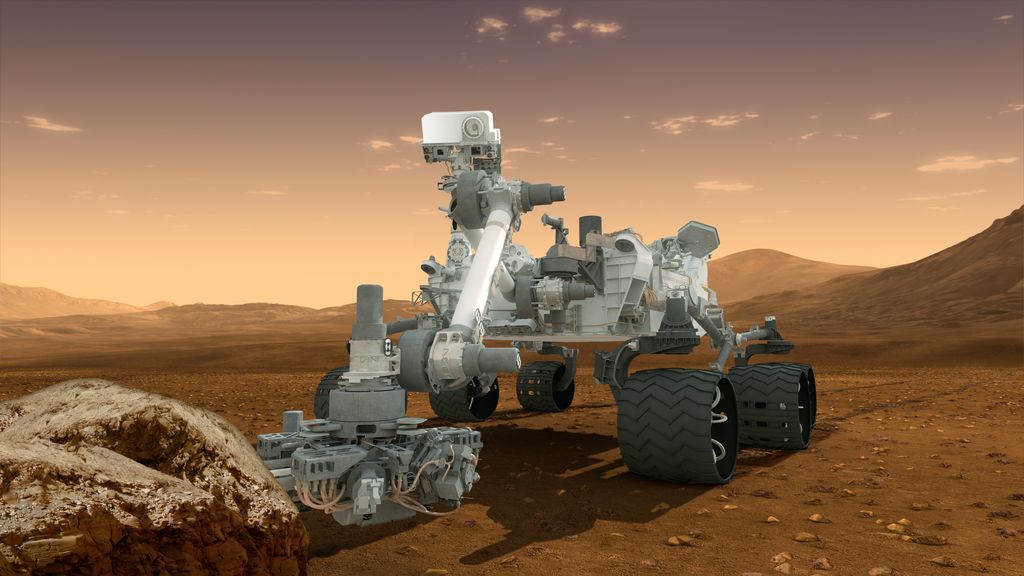
First, a mission update. On Tuesday, June 26th, NASA's Mars Science Laboratory (MSL) spacecraft made a course adjustment with a 40-second firing of four thrusters. The maneuver adjusts the location where the spacecraft will enter Mar's atmosphere by about 125 miles (200 kilometers) and advances the time of entry by about 70 seconds. This adjustment is part of the earlier-announced process to position the landing point closer to the central mound of Gale Crater, nicknamed Mount Sharp.
Second... Remember back on June 6th when we told you NASA's Jet Propulsion Laboratory (JPL) in Pasadena, California would host 25 social media followers for a three-day NASA Social, from August 3rd through August 6th, culminating in the landing of the Mars Science Laboratory (MSL) mission and Curiosity rover? (breathe, breathe, breathe) Well, you know now.
Anyway, the big news is that the party just got bigger. At least for August 3rd. On that day NASA will host its first-ever multi-center NASA Social to preview the landing.
In addition to that day's events at JPL, five other NASA field centers will host simultaneous events. The five are (1) Ames Research Center in Moffett Field, California; (2) Glenn Research Center in Cleveland; (3)Goddard Space Flight Center in Greenbelt, Maryland; (4) Johnson Space Center, Houston; and, (5) Langley Research Center in Hampton, Virginia. Each center will be connected via a multi-center NASA Television simulcast with JPL during the event. If you haven't figured this out by now, JPL is the lead NASA center for the MSL two-year mission.
Guests will learn about the MSL mission and their hosting NASA field center. They are encouraged to share their experience with others through their favorite social networks. Along with discussing MSL and Mars, guests will get a unique behind-the-scenes look at their host center and the diverse work of the agency through tours and presentations with scientists, engineers and managers. The events also will provide guests the opportunity to interact with fellow social media users, space enthusiasts and members of NASA's social media team.
No two locations are the same. Each center has a different itinerary depending on their location. And each center has their own number of invities for the event. Here is a rundown of the centers, intinerary, and number of guests.
NASA Ames: NASA's Ames Research Center in Silicon Valley, California, is inviting 20 social media followers for an all-day event to commemorate MSL and Mars. Ames developed the “Chemistry and Mineralogy” instrument (CheMin), a definitive mineralogy instrument that will identify and characterize past or present habitable environments as recorded in sediments and rocks. Participants will interact with researchers and see facilities that have contributed to landing MSL on Mars. NASA Ames was involved in the design and testing of the heat shield technology and conducted wind tunnel testing for the spacecraft's parachute. Guests will hear from prominent astrobiologists who study the origin, evolution, distribution and future of life in the universe – including Mars – and from researchers crafting future Mars mission concepts. Additional Ames tours will feature an immersive visualization of a Mars panorama, research laboratories and other highlights of Ames' expertise in exploration, science and aeronautics research.
NASA Glenn: NASA Glenn Research Center in Cleveland, Ohio, is inviting 30 social media followers to come and learn about the center’s current and historic contributions to the Mars Science Laboratory. You will see selected facilities and talk to the researchers that have been instrumental in the following elements of the MSL: Rover technology, the flexible canopy parachute that will slow down the MSL in the upper atmosphere as it lands on Mars, payload fairing used for MSL launch, dust and e-field sensors, flight sensors, Air Bag Landing System, the Multi-Mission Radioactive Thermoelectric Generator that powers MSL and keeps it warm at night, and traveling Wave Tube Communications System.
NASA Goddard: NASA’s Goddard Space Flight Center, Greenbelt, Md., is inviting 20 social media followers to celebrate MSL. Goddard scientists developed the Sample Analysis at Mars (SAM) instrument suite aboard the Mars Science Laboratory rover mission, which can identify a wide range of organic compounds in Martian rock and soil, and within the atmosphere. SAM will become an automated, mobile laboratory as it explores Mars' Gale crater tucked inside the Curiosity rover. Guests will be treated to a tour of the SAM Environmental Chamber and the Astrobiology Analytical Laboratory. The final stop will be a tour of the Integration and Testing Facility, where spacecraft are built and tested, for a unique chance to view and learn about the James Webb Space Telescope.
NASA Johnson: NASA’s Johnson Space Center in Houston is inviting 25 social media followers NASA Social guests will tour the center, visit the International Space Station mission control center, explore new technologies for the future of space science, and speak with managers, flight directors, trainers and astronauts. Scientists at the Astromaterials Research and Exploration Science Directorate at Johnson will discuss the key roles they play in the MSL mission to help look for “all of the things that are necessary for life such as water organic compounds and inorganic compounds.” Guests at Johnson Space Center will also have the opportunity to visit the astronaut training facilities to learn about the Astronaut program – from preparations and training for missions to items that improve long-duration missions for the astronauts such as better food while off the planet.
NASA Langley: NASA Langley Research Center in Hampton, Va., is inviting 30 social media followers to learn about the center’s contribution to MSL and get behind-the-scenes access to NASA’s first field center. Experts will discuss the center’s role in the Entry, Descent and Landing phase of the mission, and the MSL Entry Descent and Landing Instrumentation (MEDLI) that will measure temperature and pressure as the spacecraft descends through the Mars atmosphere. Participants also will see MEDLI hardware, as well as tour Langley facilities. The tour will showcase past-to-present Langley, with a stop at the former Lunar Landing Research Facility where Neil Armstrong and other Apollo astronauts simulated moon landings, to the hangar housing research aircraft flying Earth science missions. – and perhaps a surprise or two along the way!
And now, the legal fine print. Please read carefully...
What is a NASA Social? A NASA Social is an informal meeting of people who use social networking sites such as Twitter, Facebook and Google+. Participants at this event will be provided a unique in-person experience with the Mars Science Laboratory mission, and NASA that they are encouraged to share with others through their favorite social networks.
How do I register? NASA Social registration opens at noon on Friday, June 29, and closes Tuesday, July 3. NASA will randomly select participants from online registrations. Please check with the center listed above for details on the number of guests they’re allowing. Registration is for one person only and is non-transferable.
People may register for NASA Socials at multiple locations, but selectees will only be chosen for one event.
Do I need to have a social media account to register? Yes. This event is designed for active social media users who follow the Mars Curiosity rover, a NASA field center and/or NASA on Twitter (@MarsCuriosity, @NASA, @NASASocial), Facebook (MarsCuriosity, NASA) or Google+ (NASA). The goal of NASA Social is to allow people who interact with each other via social networks to meet in person and discuss space exploration.
Users on all social networks are encouraged to use the hashtag #NASASocial. Updates and information about the event will be shared on Twitter via @NASASocial and via posts to Facebook and Google+.
What are the registration requirements? Registration indicates your intent to travel to one of the participating NASA centers and attend the events in person. You are responsible for your own expenses for travel, accommodation, food and other amenities.
Some events and participants scheduled to appear at the event are subject to change without notice. NASA is not responsible for loss or damage incurred as a result of attending. NASA is not responsible for loss or damage incurred if the event is cancelled with limited or no notice. Please plan accordingly.
NASA locations are government facilities. Those who are selected will need to complete an additional registration step to receive clearance to enter secure areas. To be admitted, you will need to show two government-issued identification with a photo that matches the name provided on the registration. Those without proper identification cannot be admitted. All registrants must be at least 18 years old.
Can I register if I am not a U.S. citizen? No. For the five NASA field centers listed above, all attendees must be U.S. citizens. If you have a green card, you will be processed as a U.S. citizen. To be admitted, you will need to show two government-issued identification with a photo that match the name provided on the registration. Those without proper identification cannot be admitted. All registrants must be at least 18 years old.
Does my registration include a guest? Because of space limitations, you may not bring a guest. Each registration provides a place for one person only (you) and is non-transferable. Each individual wishing to attend must register separately.
What if I cannot come to the event? If you cannot come to the NASA centers to attend in person, you should not register for the NASA Social. You can follow the conversation using the #NASASocial hashtag on Twitter. JPL may broadcast a portion of the program with live chat on http://ustream.tv/NASAJPL .
If you cannot make this NASA Social, don't despair; NASA is planning others in the near future at various locations. Check back on http://www.nasa.gov/social for updates.
When will I know if I am selected? After registrations have been received and processed, an email with confirmation information and additional instructions will be sent to those selected and those on the waitlist. We expect to send notifications on or around Monday, July 9.
If you do not make the registration list for this NASA Social, you can still participate in the conversation online.
Does registration for and/or attendance at the NASA Social qualify me for media accreditation? Your NASA Social registration and/or attendance do not qualify you for news media credentials at any NASA field center, now or in the future.
Have a question not answered here? Need more information? Help is available by sending an email to HQ-social@nasa.gov.
For information about the mission, visit: www.nasa.gov/msl and mars.jpl.nasa.gov/msl .
To catch postings for all my blogs, subscribe on Twitter to @RoamingAstro .
Like what you see? Let me know! Email: RoamingAstroInput@gmail.com
-
Wednesday, June 27, 2012
Curiosity's Seven Minutes of Terror

The above image is an artist's concept of NASA's Mars Science Laboratory (MSL) with thrusters firing during the entry, descent and landing phase. Image Credit: NASA/JPL-Caltech
NASA Video, "Challenges of Getting to Mars: Curiosity's Seven Minutes of Terror." Running Time: 5 minutes 7 seconds. URL: http://t.co/PpEQhR7O . Video Credit: NASA/JPL-Caltech
Grab your popcorn! NASA's Mars Science Laboratory (MSL) mission team has released another Martian epic.
Okay. Its more like a 5-minute 7-second video. But it's still pretty darn cool.
The video is entitled, "Challenges of Getting to Mars: Curiosity's Seven Minutes of Terror." Now, doesn't that title grab your attention? Hollywood could learn a thing or two from the MSL mission team. I'm just sayin'.
The video reviews the mission from the point of entry into the Martian atmosphere, to the point of landing the Curiosity rover on the surface. The video also considers the point of view of the mission team members, who can only wait until the automated landing completes, whether successfully or unsuccessfully. Its a real nail biter — the video as well as the actual event. Check it out and tell your friends.
The MSL rover Curiosity is scheduled to land at approximately 1:31 AM EDT, August 6 (10:31 PM PDT, August 5). Following checkout operations, Curiosity will begin a two-year study of whether the landing vicinity ever offered an environment favorable for microbial life.
And now, the mission particulars...
Launched November 26, 2011, NASA's Mars Science Laboratory (MSL) mission and Curiosity rover are on track for landing at approximately 1:31 AM EDT, August 6 (10:31 PM PDT, August 5) to begin a two-year prime mission. Researchers plan to use Curiosity to study layers in Gale Crater's central mound, Mount Sharp. The mission will investigate whether the area has ever offered an environment favorable for microbial life.
NASA's Jet Propulsion Laboratory, a division of the California Institute of Technology in Pasadena, manages the mission for the NASA Science Mission Directorate, Washington.
More information about Curiosity is available online at www.nasa.gov/msl and mars.jpl.nasa.gov/msl . You can follow the mission on Facebook at: www.facebook.com/marscuriosity and on Twitter at: www.twitter.com/marscuriosity .
To catch postings for all my blogs, subscribe on Twitter to @RoamingAstro .
Like what you see? Let me know! Email: RoamingAstroInput@gmail.com
-
Tuesday, June 26, 2012
The Mismatched Offspring of Kepler-36

The above image is an artist's conception showing Kepler-36c as it might look from the surface of neighboring Kepler-36b. Image Credit: Harvard-Smithsonian Center for Astrophysics
Astronomers have discovered a pair of neighboring planets with dissimilar densities orbiting very close to each other. The planets are too close to their star to be in the so-called "habitable zone," the region in a star system where liquid water might exist on the surface, but they do have the closest orbits between two planets ever confirmed. The findings appeared June 21st in the journal Science. The journal may be viewed online at the URL: www.sciencemag.org .
The research team was led by Josh Carter, a Hubble fellow at the Harvard-Smithsonian Center for Astrophysics in Cambridge, Massachusetts, and Eric Agol, a professor of astronomy at the University of Washington in Seattle. The team used data from NASA's Kepler space telescope, which measures dips in the brightness of more than 150,000 stars, to search for planets.
The system's inner planet, Kepler-36b, orbits its host star every 13.8 days. The outer planet, Kepler-36c, orbits every 16.2 days. On their closest approach, the pair come within about 1.2 million miles (1.9 million kilometers) of each other. This is only five times the Earth-moon distance and about 20 times closer to each other than any two planets in our solar system.
Kepler-36b is a rocky world measuring 1.5 times the radius, and 4.5 times the mass, of Earth. Kepler-36c is a gaseous giant measuring 3.7 times the radius, and eight times the mass, of Earth.
About Kepler-36
Kepler-36 is a star in the constellation Cygnus, the Swan. It has the celestial coordinates (J2000) Right Ascension 19h 25m 0.04s, Declination +49° 13′ 54.6″ . Viewed from Earth, Kepler-36 has an apparent magnitude of 11.9.
Kepler-36 is a spectral type G1IV yellow subgiant, slightly hotter, and a couple of billion years older, than our sun. The Kepler-36 system is located 1,530 light-years from Earth. Kepler-36's other designations include: KOI-277, KIC 11401755, 2MASS 19250004+4913545
You can read more about the discovery by reading the news releases of the Harvard-Smithsonian Center for Astrophysics, www.cfa.harvard.edu and University of Washington, www.washington.edu .
And now, the mission particulars...
Ames Research Center in Moffett Field, California, manages Kepler's ground system development, mission operations and science data analysis. NASA's Jet Propulsion Laboratory, Pasadena, California, managed the Kepler mission's development.
Ball Aerospace and Technologies Corp. in Boulder, Colo., developed the Kepler flight system and supports mission operations with the Laboratory for Atmospheric and Space Physics at the University of Colorado in Boulder.
The Space Telescope Science Institute in Baltimore archives, hosts and distributes Kepler science data. Kepler is NASA's 10th Discovery Mission and is funded by NASA's Science Mission Directorate at the agency's headquarters in Washington. The California Institute of Technology manages JPL for NASA.
For more information about the Kepler mission, visit: http://www.nasa.gov/kepler.
You can learn more about exoplanets and NASA's planet-finding program at http://planetquest.jpl.nasa.gov
To catch postings for all my blogs, subscribe on Twitter to @RoamingAstro .
Like what you see? Let me know! Email: RoamingAstroInput@gmail.com
-
Monday, June 25, 2012
Most Quasars are Snackers, It Seems

The above image is actually a collection of four, each showing a galaxy with dust surrounding them. Each has a quasar within that cannot be seen by the Hubble Space Telescope, but can be seen in the infrared by the Spitzer Space Telescope. Of the four, only the galaxy at the upper left shows signs of a collision. The images were taken by Hubble's Wide Field Camera 3 between 2011 and 2012. Image Credit: NASA, ESA, and K. Schawinski (Yale University)
According to observations from NASA's Spitzer and Hubble space telescopes, black holes in the early universe needed just a few snacks, rather than one giant meal, to fuel their quasars and help them grow.
Quasar Primer
A quasi-stellar radio source, abbreviated as "quasar," is a very energetic and distant active galactic nucleus. Quasars are extremely luminous and were first identified as being high redshift sources of electromagnetic energy, including radio waves and visible light, that were point-like, similar to stars, rather than extended sources similar to galaxies.
The nature of quasars was controversial until the early 1980s. There is now a scientific consensus that a quasar is a compact region in the center of a massive galaxy surrounding its central supermassive black hole. Its size is 10–10,000 times the Schwarzschild radius of the black hole. The quasar is powered by an accretion disc around the black hole.
In English, Please?
Quasars are the brilliant beacons of light that are powered by black holes feasting on captured material, and in the process, heating some of the matter to millions of degrees.
Well why didn't you just say so? Please continue...
The brightest quasars reside in galaxies distorted by collisions with other galaxies. These encounters send lots of gas and dust into the gravitational whirlpool of hungry black holes.
But now, astronomers are uncovering an underlying population of fainter quasars that thrive in normal-looking spiral galaxies. They are triggered by black holes snacking on such tasty treats as a batch of gas or the occasional small satellite galaxy.
A census of 30 quasar host galaxies conducted with two of NASA's premier observatories, Hubble and Spitzer, has found that 26 of the host galaxies bear no telltale signs of collisions with neighbors, such as distorted shapes. Only one galaxy in the sample shows evidence of an interaction with another galaxy. The galaxies existed roughly 8 to 12 billion years ago, during a peak epoch of black-hole growth.
The study, led by Kevin Schawinski of Yale University, New Haven, Connecticut, bolsters evidence that the growth of most massive black holes in the early universe was fueled by small, long-term events rather than dramatic short-term major mergers.
While the quasars produced by galaxy collisions are very bright, the quasars in this study were more typical and much less luminous. The brilliant quasars born of galaxy mergers get all the attention, but the typical quasars are where most of the black-hole growth is happening. They are the norm, and they don't need the drama of a collision to shine.
Schawinski's science paper has been accepted for publication in a letter to the Monthly Notices of the Royal Astronomical Society. The periodical may be read online at this URL: www.wiley.com/WileyCDA/WileyTitle/productCd-MNR.html
For his study, Schawinski analyzed galaxies observed by the Spitzer and Hubble telescopes in the Cosmic Assembly Near-infrared Deep Extragalactic Legacy Survey. He chose 30 dust-enshrouded galaxies that appeared extremely bright in infrared images taken by the Spitzer telescope, a sign that their resident black holes are feasting on surrounding material. The dust is blocking the quasar's light at visible wavelengths. But infrared light pierces the dust, allowing Schawinski to study the galaxies' detailed structure. The masses of those galaxies are comparable to that of our Milky Way.
Schawinski then studied the galaxies in near-infrared images taken by Hubble's Wide Field Camera 3. Hubble's sharp images allowed careful analysis of galaxy shapes, which would be significantly distorted if major galaxy mergers had taken place and were disrupting the structure. He found that in all but one instance, the galaxies show no such disruption.
Whatever process is feeding the quasars, it's below the detection capability of even Hubble. Schawinski thinks the process is a combination of such things as random stirring if gas, supernovae blasts, swallowing of small bodies, and streams of gas and stars feeding material into the nucleus.
A black hole doesn't need much gas to satisfy its hunger and turn on a quasar. According to Schawinski, there's more than enough gas within a few light-years from the center of our Milky Way to turn it into a quasar. It just doesn't happen. But it could happen if a small cloud of gas ran into the black hole. Random motions and stirrings inside the galaxy would channel gas into the black hole. Schawinski noted that ten billion years ago, those random motions were more common and there was more gas to go around. Small galaxies also were more abundant and were swallowed up by larger galaxies.
The galaxies in Schawinski's study are prime targets for NASA's upcoming James Webb Space Telescope, a large infrared observatory scheduled to launch later this decade. Schawinski notes that, while Hubble and Spitzer have been trailblazers in finding these quasars in non-collision galaxies, he thinks the Webb telescope is needed to understand the kinds of events that power them.
The team of astronomers in this study consists of K. Schawinski, B.D. Simmons, C.M. Urry and E. Glikman (Yale University), and E. Treister (Universidad de Concepcion, Chile).
And now, the mission particulars...
The Hubble Space Telescope (HST) is a space telescope that was carried into orbit by the Space Shuttle Discovery in April 1990. HST is a 2.4-meter (7.9 ft) aperture telescope in low Earth orbit, Hubble's four main instruments observe in the near ultraviolet, visible, and near infrared. The telescope is named after the astronomer Edwin Hubble. HST was built by NASA, with contributions from the European Space Agency (ESA), and is operated by the Space Telescope Science Institute. The HST is one of NASA's Great Observatories, along with the Compton Gamma Ray Observatory, the Chandra X-ray Observatory, and the Spitzer Space Telescope. The HST mission websites are: hubble.nasa.gov and asd.gsfc.nasa.gov/archive/hubble and hubblesite.org .
The Spitzer Space Telescope (SST) was launched August 2003 aboard a Delta II rocket. Spitzer is an infrared space observatory, the fourth and final of the NASA Great Observatories program. The observatory was renamed in honor of Lyman Spitzer, one of the 20th century's great scientists. The mission website is: www.spitzer.caltech.edu/
To catch postings for all my blogs, subscribe on Twitter to @RoamingAstro .
Like what you see? Let me know! Email: RoamingAstroInput@gmail.com
-
Sunday, June 24, 2012
2011 AG5 Is Not a Threat, We Think...

The above image shows the location, as of June 15th, of asteroid 2011 AG5. Image Credit: NASA/JPL-Caltech
NASA recently released the latest analysis data and findings on Asteroid 2011 AG5. Researchers anticipate it will fly safely past and not impact Earth in 2040.
The current findings and analysis data were reported at a May 29 workshop at NASA's Goddard Space Flight Center in Greenbelt, Maryland, attended by scientists and engineers from around the world. Discussions focused on observations of potentially hazardous asteroids (PHAs).
About Asteroid 2011 AG5
This near-Earth asteroid was discovered January 8th, 2011 by the Mount Lemmon Survey, part of the NASA-supported Catalina Sky Survey, operated by the University of Arizona in Tucson. At the time of discovery, using a 1.52-meter (60 in) reflecting telescope, 2011 AG5 (AG5) had an apparent magnitude of 19.6. AG5 has a diameter of about 140 meters (approximately 460 feet). Several observatories monitored AG5 for nine months before it moved too far away and grew too faint to see. In addition, several pre-discovery observations were identified after the fact, and added to the data.
The observations compiled to date indicate there is a slight chance that AG5 could impact Earth in 2040. But the workshop attendees expressed confidence that in the next four years, analysis of space and ground-based observations will show the likelihood of AG5 missing Earth to be greater than 99 percent.
Remember Apophis?
On June 19th, 2004 a new near-Earth asteroid was discovered, provisionally designated 2004 MN4 and later numbered 99942 and named Apophis. Apophis was thought to pose an impact threat in 2036. But additional observations taken from 2005 through 2008 enabled NASA scientists to refine their understanding of the asteroid's path, which showed a significantly reduced likelihood of a hazardous encounter.
The greater the number of observations astronomers make of a near-Earth asteroid, the better the understanding they have about the body's orbit. Typically, this knowledge allows them to rule out a possible impact.
Observations of AG5 have been limited to date because of its present location beyond the orbit of Mars and in the daytime sky on the other side of the sun. In fall 2013, conditions will improve to allow space- and ground-based telescopes to better track the asteroid's path. At that time, AG5 will be 91 million miles (147 million kilometers) from Earth but favorably located for observations in the late evening sky.
The level of hazard will gain even more clarity in 2023, when the asteroid is approximately 1.1 million miles (1.8 million kilometers) from Earth. If AG5 passes through a 227-mile-wide (365-kilometer) region in space, called a keyhole, in early February 2023, Earth's gravitational pull could influence the object's orbital path just enough to bring it back for an impact on February 5, 2040. If the asteroid misses the keyhole, an impact in 2040 will not occur.
Researchers note that given their current understanding of AG5's orbit, the chance of its passage through the keyhole is very remote. Even so, they acknowledge the slight chance that computed odds could rise as a result of observations to be taken from 2013 to 2016. According to the experts at the workshop, even if the odds do increase, there is still ample time to plan and carry out at least one of several viable missions to change the asteroid's course.
PHA Primer
Potentially hazardous asteroids, or PHAs, are a subset of the larger group of near-Earth asteroids. They have the closest orbits to Earth's, coming within 5 million miles (about 8 million kilometers). They are large enough to enter Earth's atmosphere intact and cause damage on at least a local scale. Damage from an asteroid the size of 2011 AG5 could cover a region at least a hundred miles wide.
And now, the mission particulars...
NASA established the Near-Earth Object (NEO) Observation Program in 1998 to coordinate the agency's efforts to detect, track and characterize Earth-approaching NEOs and comets larger than 1 kilometer in size. The program now also searches for NEOs as small as object 2011 AG5. NASA supports NEO observation, tracking and analysis activities worldwide. Activities are coordinated through the NEO Program Office at JPL.
To read the workshop report and findings, visit: neo.jpl.nasa.gov .
For information about NASA asteroid missions and activities, visit: www.nasa.gov/asteroids .
To catch postings for all my blogs, subscribe on Twitter to @RoamingAstro .
Like what you see? Let me know! Email: RoamingAstroInput@gmail.com
-
Saturday, June 23, 2012
Cosmic Collision? Look, Again!

The above image is a composite of filtered exposures taken by the Advanced Camera for Surveys (ACS) aboard NASA's Hubble Space Telescope. The subject of the image is NGC 3314. In this image, North is to the top and East is to the left. Image Credit: NASA, ESA, the Hubble Heritage Team (STScI/AURA)-ESA/Hubble Collaboration, and W. Keel (University of Alabama)
Time for a pop quiz. What do you see? Well, New General Catalogue entry 3314 (NGC 3314), yes. Having celestial coordinates of (J2000) Right Ascension 10h 37m 13s, Declination -27° 41' 04" in the southern hemisphere constellation Hydra, all well and good, yes.
But if you were to say you were looking at a textbook example of colliding galaxies, you would be wrong. NGC 3314 is, in fact, a pair of aligned spiral galaxies. Back in April of of 1999, two astronomers from the University of Alabama were in the process of searching for overlapping galaxies. They imaged this area of the sky in greater detail than previously, and were the first to learn what we now see in better clarity.
The distance to NGC 3314a is roughly 117 million light-years (35 Mpc).The distance to NGC 3314b is roughly 140 million light-years (42 Mpc). The unique alignment of the two galaxies gives astronomers the opportunity to measure the properties of interstellar dust in the face-on foreground galaxy (NGC3314a), which appear dark and silhouetted against the background galaxy (NGC 3314b). The motion of the two galaxies indicates that they are both relatively undisturbed and that they are moving in markedly different directions. The above image was released June 14th.
And now, the mission particulars...
The Hubble Space Telescope (HST) is a space telescope that was carried into orbit by the Space Shuttle Discovery in April 1990. HST is a 2.4-meter (7.9 ft) aperture telescope in low Earth orbit, Hubble's four main instruments observe in the near ultraviolet, visible, and near infrared. The telescope is named after the astronomer Edwin Hubble. HST was built by NASA, with contributions from the European Space Agency (ESA), and is operated by the Space Telescope Science Institute. The HST is one of NASA's Great Observatories, along with the Compton Gamma Ray Observatory, the Chandra X-ray Observatory, and the Spitzer Space Telescope. The HST mission websites are: hubble.nasa.gov and asd.gsfc.nasa.gov/archive/hubble and hubblesite.org .
To catch postings for all my blogs, subscribe on Twitter to @RoamingAstro .
Like what you see? Let me know! Email: RoamingAstroInput@gmail.com
-
Friday, June 22, 2012
NuSTAR's Mast Is Unfurled

The above image is an artist's concept of NuSTAR in orbit with its 33-foot (10-meter) mast deployed, separating the optics module (right) from the detectors in the focal plane (left). Image Credit: NASA/JPL-Caltech
NASA's Nuclear Spectroscopic Telescope Array (NuSTAR) is one step closer to operational. On Thursday, June 21 at 1:43 PM EDT (10:43 AM PDT), nine days after launch, engineers at NuSTAR's mission control at UC Berkeley in California sent a signal to the spacecraft to start extending the 33-foot (10-meter) mast, a stable, rigid structure consisting of 56 cube-shaped units. Driven by a motor, the mast steadily inched out of a canister as each cube was assembled one by one. The process took about 26 minutes. Engineers and astronomers cheered seconds after they received word from the spacecraft that the mast was fully deployed and secure.
The NuSTAR team will now begin to verify the pointing and motion capabilities of the satellite, and fine-tune the alignment of the mast. In about five days, the team will instruct NuSTAR to take its "first light" pictures, which are used to calibrate the telescope.
Wait. Why such a long mast?
The answer has to do with the fact that X-rays behave differently than the visible light we see with our eyes. Sunlight easily reflects off surfaces, giving us the ability to see the world around us in color. X-rays, on the other hand, are not readily reflected: they either travel right through surfaces, as is the case with skin during medical X-rays, or they tend to be absorbed, by substances like your bone, for example. To focus X-rays onto the detectors at the back of a telescope, the light must hit mirrors at nearly parallel angles; if they were to hit head-on, they would be absorbed instead of reflected.
On NuSTAR, this is accomplished with two barrels of nested mirrors, each containing 133 shells, which reflect the X-rays to the back of the telescope. Because the reflecting angle is so shallow, the distance between the mirrors and the detectors is long. This is called the focal length, and it is maintained by NuSTAR's mast.
The fully extended mast is too large to launch in the lower-cost rockets required for relatively inexpensive Small Explorer class missions like NuSTAR. Instead NuSTAR launched on its Orbital Science Corporation (OSC) Pegasus XL rocket tucked inside a small canister. This rocket isn't as expensive as its bigger cousins because it launches from the air, with the help of a carrier plane, OSC's Lockheed L-1011 Stargazer.
Coming roughly 30 days after launch...
Once science operations begin, NuSTAR will observe some of the hottest, densest and most energetic objects in the universe, including black holes, their high-speed particle jets, ultra-dense neutron stars, supernova remnants and our sun. It will observe high-energy X-rays with much greater sensitivity and clarity than any mission flown to date. Among its several goals, NuSTAR will address the puzzle of how black holes and galaxies evolve together over time.
And now, the mission particulars...
NuSTAR is a Small Explorer mission led by the California Institute of Technology in Pasadena and managed by NASA's Jet Propulsion Laboratory, also in Pasadena, for NASA's Science Mission Directorate in Washington. The spacecraft was built by Orbital Sciences Corporation, Dulles, Virginia. Its instrument was built by a consortium including Caltech; JPL; the University of California, Berkeley (UC Berkley); Columbia University, New York; NASA's Goddard Space Flight Center, Greenbelt, Maryland; the Danish Technical University in Denmark; Lawrence Livermore National Laboratory, Livermore, California; and ATK Aerospace Systems, Goleta, California. NuSTAR will be operated by UC Berkeley, with the Italian Space Agency providing its equatorial ground station located at Malindi, Kenya. The mission's outreach program is based at Sonoma State University, Rohnert Park, California. NASA's Explorer Program is managed by Goddard. JPL is managed by Caltech for NASA. For
more information on the NuSTAR mission, visit www.nasa.gov/nustar and www.nustar.caltech.edu/ .
Like what you see? Let me know! Email: RoamingAstroInput@gmail.com
-
Thursday, June 21, 2012
James Webb: One Down, Three to Go

In the above image, contamination control engineers at NASA's Goddard Space Flight Center are conducting an inspection of the Mid-Infrared Instrument (MIRI) following receipt of MIRI from the European Space Agency (ESA). NASA engineers are shown in white hoods and ESA engineers are in blue hoods. Image Credit: NASA/Chris Gunn
On May 29th, NASA's Goddard Space Flight Center in Greenbelt, Maryland, took possession of the Mid-Infrared Instrument (MIRI), one four instruments that will fly aboard NASA's James Webb Space Telescope (Webb). MIRI is the first of the four to be delivered to NASA.
MIRI will allow scientists to study cold and distant objects in greater detail than ever before. It has been undergoing inspection prior its integrated into Webb's science instrument payload, which is known as the Integrated Science Instrument Module (ISIM).
Assembled at and shipped from the Science and Technology Facilities Council's Rutherford Appleton Laboratory in the United Kingdom, MIRI was developed by a consortium of 10 European institutions and NASA's Jet Propulsion Laboratory in Pasadena, California, and delivered by the European Space Agency.
MIRI will observe light with wavelengths in the mid-infrared range of 5 microns to 28 microns, which is a longer wavelength than human eyes can detect. It is the only instrument of the four with this particular ability to observe the physical processes occurring in the cosmos.
Astronomers expect MIRI to enable Webb to distinguish the oldest galaxies from more evolved objects that have undergone several cycles of star birth and death. They also expect MIRI to provide a unique window into the birth places of stars which are typically enshrouded by dust that shorter wavelength light cannot penetrate.
MIRI's sensitive detectors will allow it to observe light, cool stars in very distant galaxies; unveil newly forming stars within our Milky Way; find signatures of the formation of planets around stars other than our own; and take imagery and spectroscopy of planets, comets and the outermost bits of debris in our solar system. MIRI's images will enable scientists to study an object's shape and structure.
And now, the mission particulars...
Named after former NASA Administrator James E. Webb (1906 - 1992), NASA's James Webb Space Telescope (Webb) will be the most powerful space telescope to date. Webb is the successor to NASA's Hubble Space Telescope. The four instruments aboard Webb will reveal how the universe evolved from the Big Bang to the formation of our solar system. Webb is planned for launch in 2018 aboard an Ariane 5 rocket on a five-year mission, with an operational-life goal of 10 years. Webb is a joint project of NASA, the European Space Agency and the Canadian Space Agency.
NASA has two "Behind the Webb" videos about MIRI. To see them, visit:
go.nasa.gov/LQUFC9 and go.nasa.gov/LQUPta
For more information about the mid- and near-infrared spectrum, visit:
www.jwst.nasa.gov/faq.html#ir
For more information about NASA's James Webb Space Telescope, visit: www.jwst.nasa.gov
Follow me on Twitter at twitter.com/RoamingAstro . Like what you see? Let me know! Email: RoamingAstroInput@gmail.com
-
Wednesday, June 20, 2012
Northern Summer/Southern Winter Solstice 2012
This video of the sun, taken by the Solar Dynamics Observatory (SDO), covers almost 26 hours from June 18 at 8:44 UT to June 19, 10:34 UT.
www.youtube.com/watch?v=ByCCsQ98B5s Video Credit: NASA SDO
On Thursday, June 21st, 2012 at 03:30 UTC (Wednesday, June 20th at 11:30 EDT) the sun will reach its most northerly point in the sky, visible overhead from the Tropic of Cancer. This will mark midsummer in the northern hemisphere and midwinter in the southern hemisphere. This day also marks the beginning of summer in the northern hemisphere and of winter in the southern hemisphere. At this point, the sun has the coordinates (J2000) Right Ascension 05 hr 59 min, Declination +23° 26', located in the constellation Taurus, the Bull.
We celebrate the arrival of summer with this video taken by the Solar Dynamics Observatory (SDO). Over the past two weeks we have been watching the Active Region 1504 (AR 1504) appear on the Eastern limb of the sun, release several M-class solar flares while moving across the Earth facing side of the Sun. As it is decaying and moving towards the Western limb of the Sun, we are getting one good last look at these beautiful sunspots. This video covers almost 26 hours from June 18 at 8:44 UT to June 19, 10:34 UT.
And now, the mission particulars...
Launched February 11th, 2010, the Solar Dynamics Observatory (SDO) is NASA's mission to observe the sun. SDO is part of the Living With a Star (LWS) program. The goal of the LWS program is to develop the scientific understanding necessary to effectively address those aspects of the connected Sun–Earth system that directly affect life and society. SDO's goal is to understand the sun's influence on Earth and near-Earth space by studying the solar atmosphere on small scales of space and time and in many wavelengths simultaneously. The goal of SDO is to investigate how the sun's magnetic field is generated and structured, how this stored magnetic energy is converted and released into the heliosphere and geospace in the form of solar wind, energetic particles, and variations in the solar irradiance.
To learn more about the sun and to stay current on solar activity, visit the mission home page of Solar Dynamics Observatory (SDO), sdo.gsfc.nasa.gov .
Like what you see? Let me know! Email: RoamingAstroInput@gmail.com
-
www.youtube.com/watch?v=ByCCsQ98B5s Video Credit: NASA SDO
On Thursday, June 21st, 2012 at 03:30 UTC (Wednesday, June 20th at 11:30 EDT) the sun will reach its most northerly point in the sky, visible overhead from the Tropic of Cancer. This will mark midsummer in the northern hemisphere and midwinter in the southern hemisphere. This day also marks the beginning of summer in the northern hemisphere and of winter in the southern hemisphere. At this point, the sun has the coordinates (J2000) Right Ascension 05 hr 59 min, Declination +23° 26', located in the constellation Taurus, the Bull.
We celebrate the arrival of summer with this video taken by the Solar Dynamics Observatory (SDO). Over the past two weeks we have been watching the Active Region 1504 (AR 1504) appear on the Eastern limb of the sun, release several M-class solar flares while moving across the Earth facing side of the Sun. As it is decaying and moving towards the Western limb of the Sun, we are getting one good last look at these beautiful sunspots. This video covers almost 26 hours from June 18 at 8:44 UT to June 19, 10:34 UT.
And now, the mission particulars...
Launched February 11th, 2010, the Solar Dynamics Observatory (SDO) is NASA's mission to observe the sun. SDO is part of the Living With a Star (LWS) program. The goal of the LWS program is to develop the scientific understanding necessary to effectively address those aspects of the connected Sun–Earth system that directly affect life and society. SDO's goal is to understand the sun's influence on Earth and near-Earth space by studying the solar atmosphere on small scales of space and time and in many wavelengths simultaneously. The goal of SDO is to investigate how the sun's magnetic field is generated and structured, how this stored magnetic energy is converted and released into the heliosphere and geospace in the form of solar wind, energetic particles, and variations in the solar irradiance.
To learn more about the sun and to stay current on solar activity, visit the mission home page of Solar Dynamics Observatory (SDO), sdo.gsfc.nasa.gov .
Like what you see? Let me know! Email: RoamingAstroInput@gmail.com
-
Tuesday, June 19, 2012
"Last Hurrah" for Dawn and Vesta

The above artist's concept shows NASA's Dawn spacecraft orbiting the giant asteroid Vesta. The depiction of Vesta is based on images obtained by Dawn's framing camera. Image Credit: NASA/JPL-Caltech
At the end of April, NASA's Dawn spacecraft and mission team successfully completed nearly five months of low-altitude study of giant asteroid Vesta, orbiting at an average altitude of 210 kilometers (130 miles). Beginning May 1st, Dawn made a gradual, six-week climb to an average altitude of 420 miles (680 kilometers) above the surface. And on June 15th, Dawn began its final major science data-gathering phase at Vesta, called high-altitude mapping orbit 2. We might also call this Dawn and Vesta's "Last Hurrah."
Observations obtained from this orbit will provide a companion set of data and images to those obtained during the first high-altitude mapping orbit phase, which was completed in October 2011. A key difference in this phase will be the angle of the sunlight hitting Vesta. The new angle illuminates more of the northern regions that were missed in previous mapping. The principal science observations planned in this new orbit will be obtained with the framing camera and the visible and infrared mapping spectrometer.
Following this final science data gathering phase, Dawn will then spend almost five weeks spiraling out from the giant asteroid to the point at which Vesta will lose its gravitational hold on the spacecraft. That departure day is expected to be around August 26 (my birthday). Dawn will turn to view Vesta as it leaves and acquire more data. Then, Dawn will set its sights on the dwarf planet Ceres, and begin a two-and-a-half year journey to investigate the largest body in the main asteroid belt. Dawn will enter orbit around Ceres in 2015.
And now, the mission particulars...
The Dawn mission to Vesta and Ceres is managed by the Jet Propulsion Laboratory (JPL), a division of the California Institute of Technology in Pasadena, for NASA's Science Mission Directorate, Washington D.C. UCLA is responsible for overall Dawn mission science. Dawn is a project of the directorate's Discovery Program, managed by NASA's Marshall Space Flight Center in Huntsville, Alabama. Orbital Sciences Corp. in Dulles, Virginia, designed and built the spacecraft. The German Aerospace Center, the Max Planck Institute for Solar System Research, the Italian Space Agency and the Italian National Astrophysical Institute are international partners on the mission team. The Dawn framing cameras were developed and built under the leadership of the Max Planck Institute for Solar System Research, Katlenburg-Lindau, Germany, with significant contributions by DLR German Aerospace Center, Institute of Planetary Research, Berlin, and in coordination with the Institute of Computer and Communication Network Engineering, Braunschweig. The Framing Camera project is funded by the Max Planck Society, DLR, and NASA/JPL. The California Institute of Technology in Pasadena manages JPL for NASA.
To view the new Vesta images and for more information about Dawn, visit: www.nasa.gov/dawn and dawn.jpl.nasa.gov .
Like what you see? Let me know! Email: RoamingAstroInput@gmail.com
-
Monday, June 18, 2012
No Heavy Metals? No Problem!

The above image is an artist's concept of a planet transiting (passing across) the disc of a distant star. The Kepler mission discovers and studies extra-solar planets (exoplanets) by watching distant stars for the dimming starlight caused by planet transits. Image Credit: Ames Wendy Stenzel/NASA
Until recently, astronomers thought the formation of small worlds like Earth occurred mostly around stars rich in heavy elements such as iron and silicon. But new ground-based observations, combined with data collected by NASA's Kepler space telescope, show small planets form around stars with a wide range of heavy element content and suggest they may be widespread in our galaxy.
A research team led by Lars A. Buchhave, an astrophysicist at the Niels Bohr Institute and the Centre for Star and Planet Formation at the University of Copenhagen, studied the elemental composition of more than 150 stars harboring 226 planet candidates smaller than Neptune.
Buchhave wanted to investigate whether small planets needed a special environment in order to form, like the giant gas planets, which prefer to develop in environments with a high content of heavy elements. The current study shows that small planets do not discriminate, forming around stars with a wide range of heavy metal content, including stars with only 25 percent of the metallicity of our sun.
I'm sorry. Metal-what-ity?
Astronomers refer to all chemical elements heavier than hydrogen and helium as metals. They define metallicity as the metal content of heavier elements in a star and our own star is used as a baseline. Stars with a higher fraction of heavy elements than the sun are considered metal-rich. Stars with a lower fraction of heavy elements are considered metal-poor.
Planets are created in disks of gas and dust around new stars. Planets like Earth are made almost entirely of elements like iron, oxygen, silicon and magnesium. The metallicity of a star mirrors the metal content of the planet-forming disk. Astronomers have thought that large quantities of heavy elements in the disk would lead to more efficient planet formation. It has long been noted that giant planets with short orbital periods tend to be associated with metal-rich stars.
Unlike gas giants, the occurrence of smaller planets is not strongly dependent on the heavy element content of their parent stars. Planets up to four times the size of Earth can form around stars with a wide range of heavy element content, including stars with a lower metallicity than the sun. The findings are described in a new study published in the journal Nature. The journal may be visited online at this URL: www..nature.com/nature .
The mission team notes that Kepler has identified thousands of planet candidates, which makes it possible to study big-picture questions like whether small planets need a special environment in which to form. And the new data suggest that small planets may form around stars with a wide range of metallicities.
The ground-based spectroscopic observations for this study were made at the Nordic Optical Telescope on La Palma in the Canary Islands; Fred Lawrence Whipple Observatory on Mt. Hopkins in Arizona; McDonald Observatory at the University of Texas at Austin; and W.M. Keck Observatory atop Mauna Kea in Hawaii.
Launched in March 2009, Kepler searches for planets by continuously monitoring more than 150,000 stars, looking for telltale dips in their brightness caused by passing, or transiting, planets. At least three transits are required to verify a signal as a planet. Follow-up observations from ground-based telescopes are also needed to confirm a candidate as a planet.
And now, the mission particulars...
Ames manages Kepler's ground system development, mission operations and science data analysis. NASA's Jet Propulsion Laboratory (JPL) in Pasadena, California, managed the Kepler mission development. JPL is managed by the California Institute of Technology, also in Pasadena, for NASA.
Ball Aerospace & Technologies Corp. in Boulder, Colorado, developed the Kepler flight system and supports mission operations with the Laboratory for Atmospheric and Space Physics at the University of Colorado in Boulder.
The Space Telescope Science Institute in Baltimore archives, hosts and distributes Kepler science data. Kepler is NASA's 10th Discovery Mission and is funded by NASA's Science Mission Directorate at the agency's headquarters in Washington.
For more information about the Kepler mission, visit: www.nasa.gov/kepler .
Like what you see? Let me know! Email: RoamingAstroInput@gmail.com
-
Sunday, June 17, 2012
AR 1504 Update for June 17th
A geomagnetic storm is in progress in the wake of the "double CME" impact on June 16th. The hit, which strongly compressed Earth's magnetic field, lit up both poles with bright auroras. The impact was the result of two recent coronal mass ejections (CMEs) from the sun's Active Region 1504 (AR 1504).
Beautiful displays of the Southern Lights were seen in New Zealand. In North America, Northern Lights descended as far south as Wisconsin, Minnesota, Iowa, Washington and the Dakotas.
Geomagnetic Storm Primer
A geomagnetic storm is a temporary disturbance of Earth's magnetosphere caused by a disturbance in the interplanetary medium. A geomagnetic storm is caused by a solar wind shock wave and/or cloud of magnetic field which interacts with Earth's magnetic field. The increase in the solar wind pressure initially compresses the magnetosphere and the solar wind's magnetic field will interact with Earth’s magnetic field and transfer an increased amount of energy into the magnetosphere. Both interactions cause an increase in movement of plasma through the magnetosphere (driven by increased electric fields inside the magnetosphere) and an increase in electric current in the magnetosphere and ionosphere. During the main phase of a geomagnetic storm, electric current in the magnetosphere create magnetic force which pushes out the boundary between the magnetosphere and the solar wind. The disturbance in the interplanetary medium which drives the geomagnetic storm may be due to a CME or a high speed stream (co-rotating interaction region or CIR) of the solar wind originating from a region of weak magnetic field on the Sun’s surface. The frequency of geomagnetic storms increases and decreases with the sunspot cycle. CME driven storms are more common during the maximum of the solar cycle and CIR driven storms are more common during the minimum of the solar cycle.
More AR 1504-Related Activity Likely
Solar wind conditions in the wake of the CME favor continued disturbances. Forecasters for the National Oceanic and Atmospheric Administration (NOAA) estimate a 55% chance of more high-latitude geomagnetic storms during the next 24 hours.
And NOAA forecasters are still estimating a 65% chance of M-flares and a 5% chance of X-flares from AR 1504 during the next 24 hours. To visit NOAA online, follow this link, www.noaa.gov/ . Please stay tuned...
To learn more about the sun and to stay current on solar activity, visit the mission home page of Solar Dynamics Observatory (SDO), sdo.gsfc.nasa.gov/ .
Like what you see? Let me know! Email: RoamingAstroInput@gmail.com
-
Beautiful displays of the Southern Lights were seen in New Zealand. In North America, Northern Lights descended as far south as Wisconsin, Minnesota, Iowa, Washington and the Dakotas.
Geomagnetic Storm Primer
A geomagnetic storm is a temporary disturbance of Earth's magnetosphere caused by a disturbance in the interplanetary medium. A geomagnetic storm is caused by a solar wind shock wave and/or cloud of magnetic field which interacts with Earth's magnetic field. The increase in the solar wind pressure initially compresses the magnetosphere and the solar wind's magnetic field will interact with Earth’s magnetic field and transfer an increased amount of energy into the magnetosphere. Both interactions cause an increase in movement of plasma through the magnetosphere (driven by increased electric fields inside the magnetosphere) and an increase in electric current in the magnetosphere and ionosphere. During the main phase of a geomagnetic storm, electric current in the magnetosphere create magnetic force which pushes out the boundary between the magnetosphere and the solar wind. The disturbance in the interplanetary medium which drives the geomagnetic storm may be due to a CME or a high speed stream (co-rotating interaction region or CIR) of the solar wind originating from a region of weak magnetic field on the Sun’s surface. The frequency of geomagnetic storms increases and decreases with the sunspot cycle. CME driven storms are more common during the maximum of the solar cycle and CIR driven storms are more common during the minimum of the solar cycle.
More AR 1504-Related Activity Likely
Solar wind conditions in the wake of the CME favor continued disturbances. Forecasters for the National Oceanic and Atmospheric Administration (NOAA) estimate a 55% chance of more high-latitude geomagnetic storms during the next 24 hours.
And NOAA forecasters are still estimating a 65% chance of M-flares and a 5% chance of X-flares from AR 1504 during the next 24 hours. To visit NOAA online, follow this link, www.noaa.gov/ . Please stay tuned...
To learn more about the sun and to stay current on solar activity, visit the mission home page of Solar Dynamics Observatory (SDO), sdo.gsfc.nasa.gov/ .
Like what you see? Let me know! Email: RoamingAstroInput@gmail.com
-
Subscribe to:
Posts (Atom)